Behavior Change Techniques
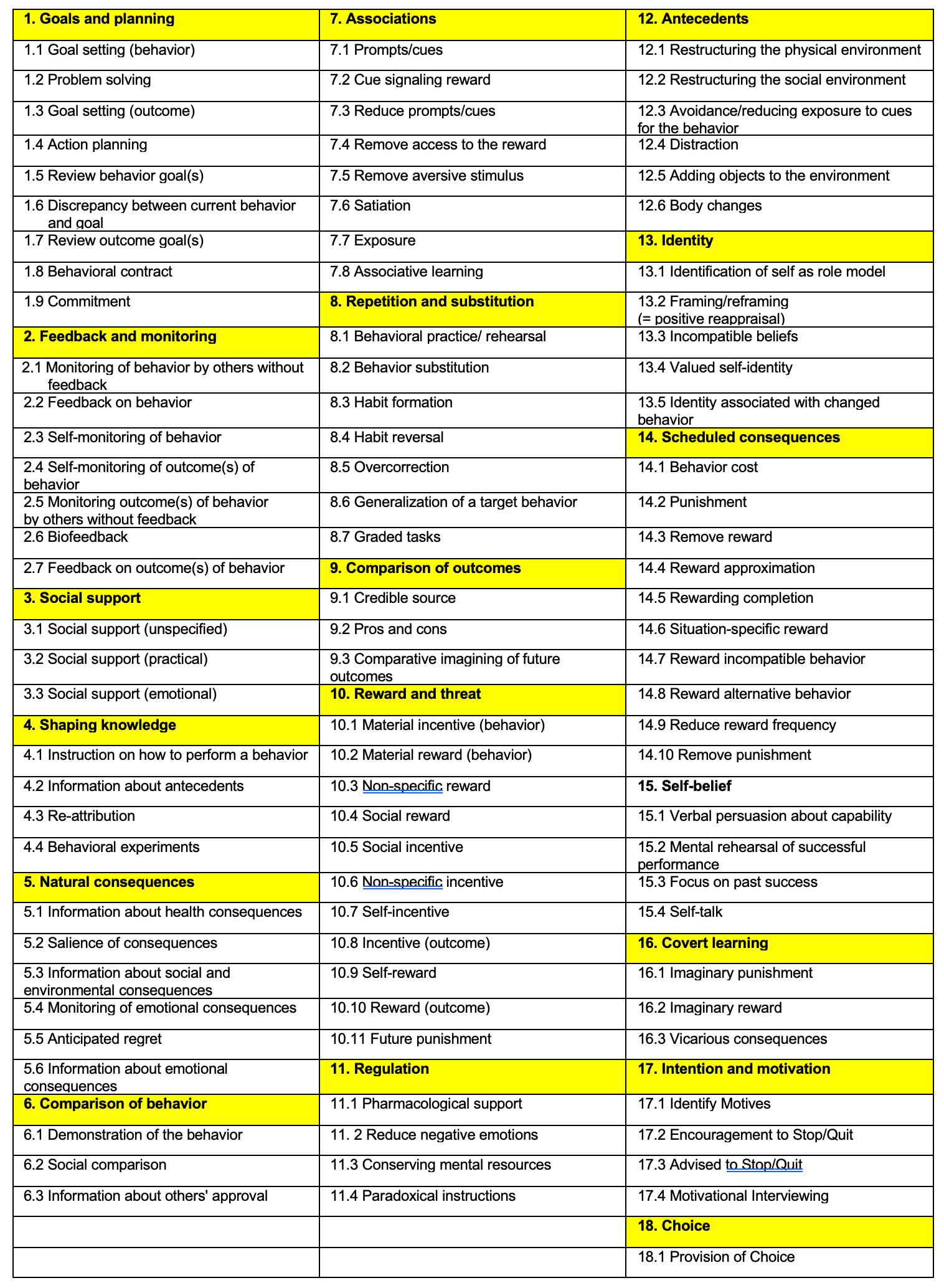
Behavior change techniques (BCTs) are the smallest components of behavioral interventions that can bring about change; they are the content or “active ingredients” of the intervention.
We coded the BCTs used in interventions using a taxonomy developed by Michie et al. (2013) supplemented by BCTs observed during the review process. Coding was highly reliable.
The coding frame contains 98 BCTs organized into 18 clusters (see image). Definitions of each BCT can be found here.
Use the dropdown menu under Behavior Change Techniques to access intervention materials for different techniques.
BCTs could target four key behaviors to promote quit intentions and smoking cessation:
Quitting — techniques targeting the transition from smoking to cessation.
Abstinence — techniques targeting the maintenance of smoking cessation.
Pharmacology — techniques targeting the use of pharmacotherapy.
Ancillary — techniques targeting non-smoking behaviors (e.g., physical activity, alcohol use) that could facilitate quitting smoking.